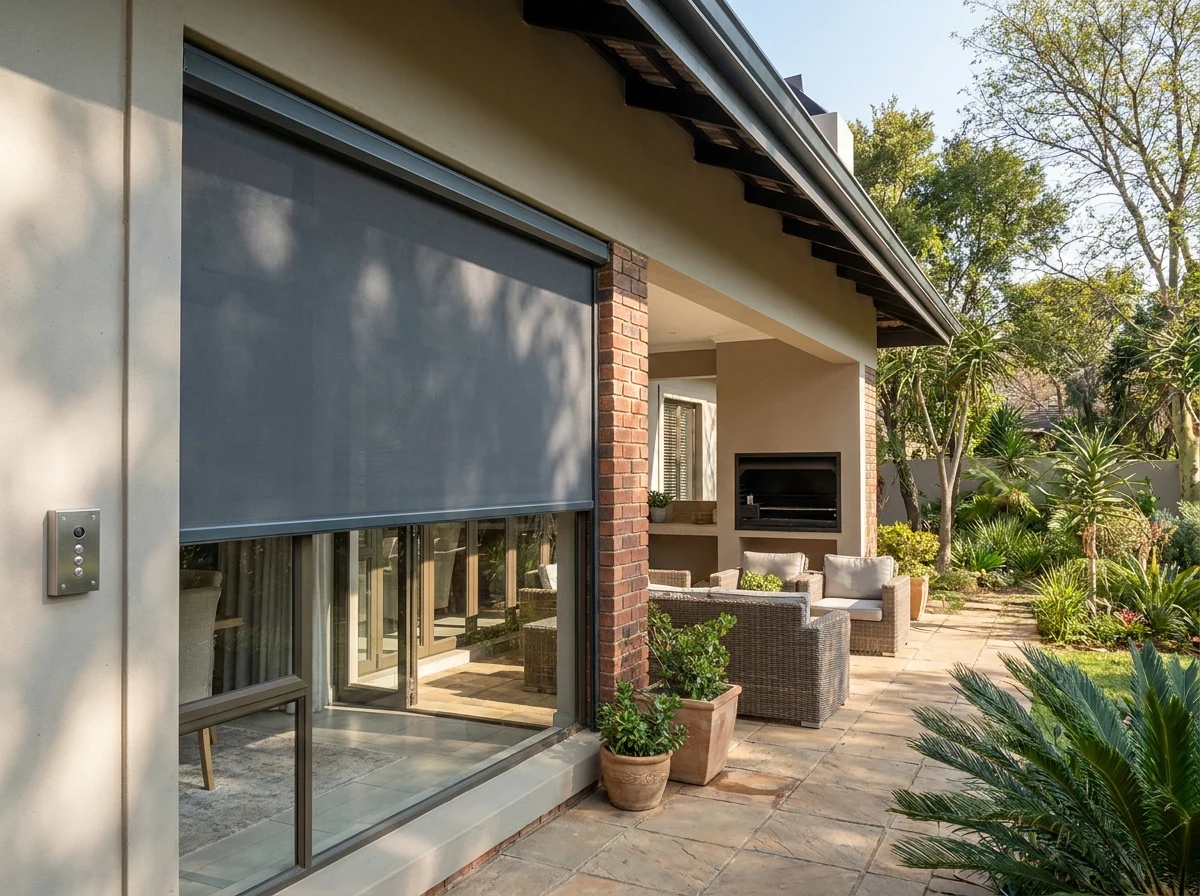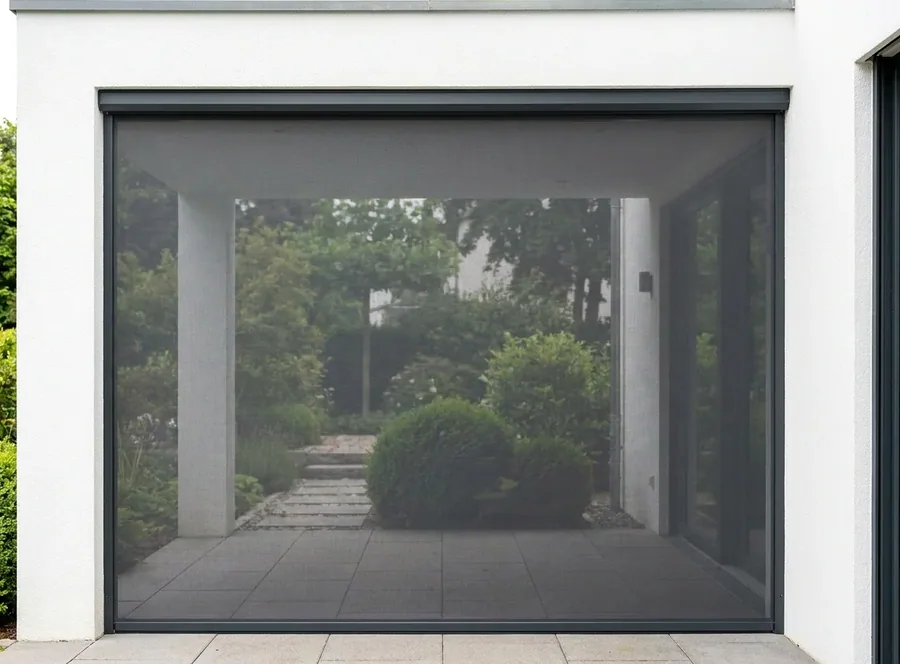
An ordinary outdoor blind hangs loose and flaps. A zip screen has a welded keder edge running inside a channel down each side — the fabric is physically locked into the track along its whole height, so it stays flat and taut in wind that would have an unguided blind slapping against the furniture.
On a Bryanston pergola or a covered patio that catches the afternoon breeze, that difference decides whether the space gets used or ignored.
Crank-operated on smaller screens; motorised with a remote on anything wide, which is most patio installations. Add a wind sensor and the screen retracts itself when the gusts arrive. Screens can also be linked so one button closes the whole patio, which is the version people actually use every evening.
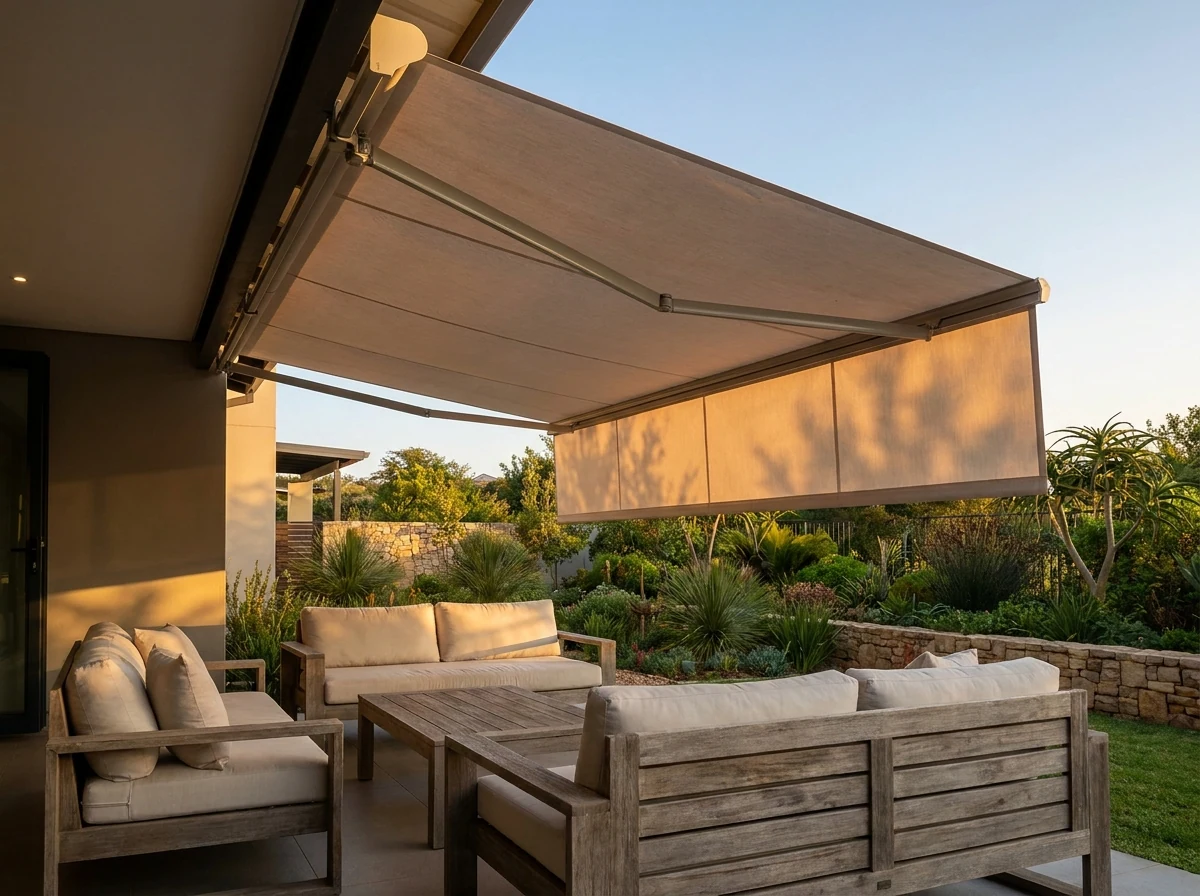
A zip screen works vertically: it stops the low sun, the wind and the view-in from the side. An awning works overhead: it stops the sun coming down on you. They solve different halves of the same problem, and on a north-facing Bryanston patio the honest answer is usually both — an awning for the overhead load, a drop screen on the western edge for the late glare that comes in sideways underneath it.
Also in the range
Closing in the outdoor room
Zip screens go up between the pergola posts in Morningside and across entertainment areas in Sunninghill most often — the same tensioned mesh handles a windy corner in Hurlingham, River Club or Lonehill too.
Next step
Tell us what you're dealing with. One of our expert consultants will contact you shortly to arrange a free in-home measure with samples — no obligation.
Book my free measure Bryanston Blinds